
NUI#11 - Riffle
India doesn't build consumer software. India doesn't do creativity. India definitely doesn't build music tools for the world. Riffle didn't get the memo.

If you don’t use X, you probably didn’t see this. But if, like us, you’re terminally online and have that accursed app hooked into your veins, you definitely saw this post.
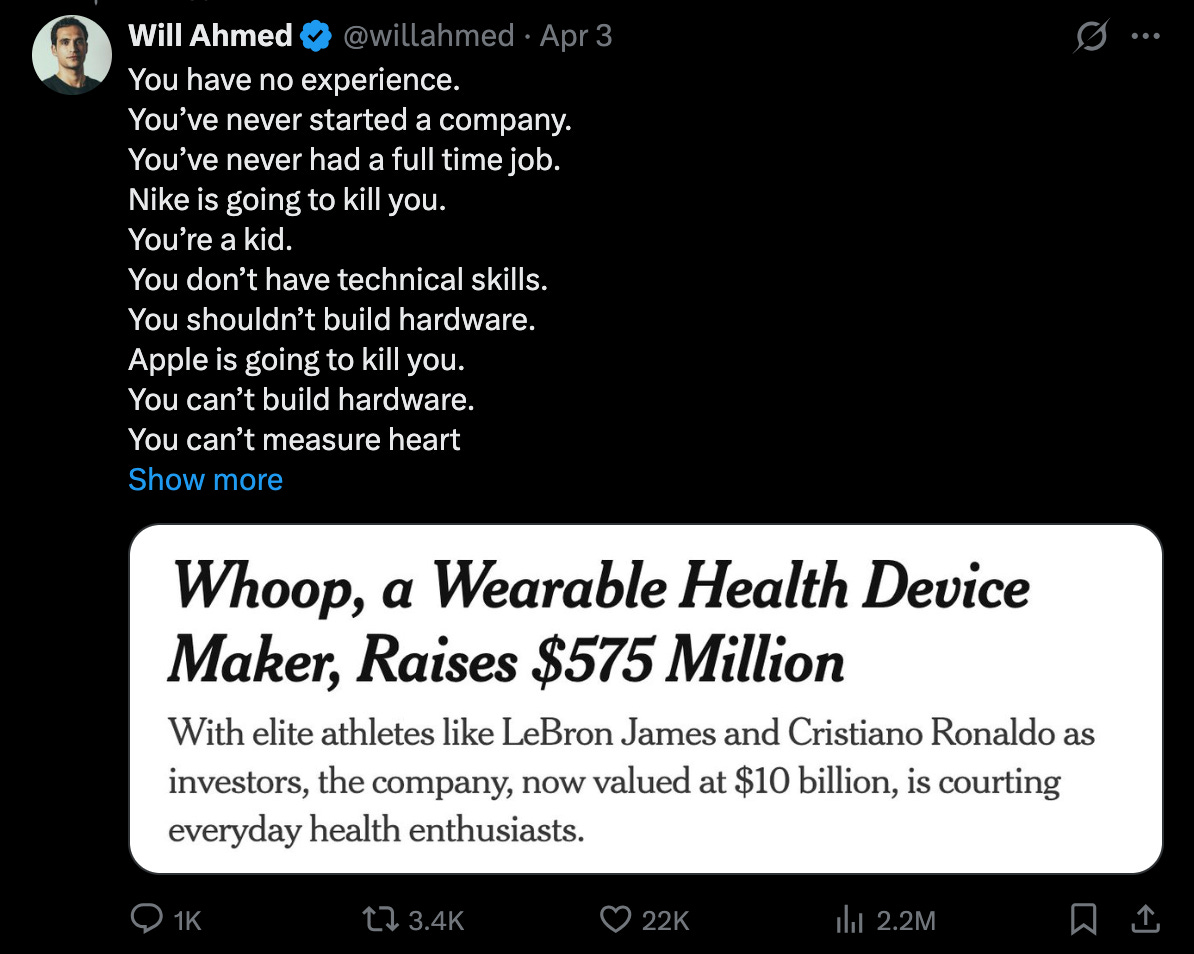
Every founder and investor from San Francisco to Sarjapur Road seemed to have an opinion, and there was widespread acclaim for Ahmed and his company from all quarters.
That’s great for Whoop, and well-deserved. But it’s easy to praise the king after the coronation. What about the tens of thousands of founders fighting to take the first step towards the promised land?
Should our adulation be reserved only for those who have already won? Does recognition begin after the unicorn barrier?
I say: fuck no.
In today’s venture landscape, you can’t throw a stone without hitting a founder building an AI-native vertical software company. Said stone probably ricochets off two voice agent company founders before landing at the feet of a ‘deep tech investor’.
Don’t get me wrong, there is nothing wrong with these categories. They unlock value and offer efficiency and innovation to the world economy.

But the wider discourse is tilting towards monotony. Most people just come across as boring and repetitive.
In this drab, grey colour palette, Riffle stands out - a bright, multicoloured ball of rebel spirit. One of the founders literally changes his hair colour every time I speak to him.
Oh, you can’t do consumer from India. Indians can’t build global products. Indians are good at coding, not design and taste. Music is a dead category.
Riffle politely listens to all of that, sticks two fingers in the air, and drowns it out in a wave of rock ‘n’ roll.
I don’t know whether they’ll succeed. The odds are certainly stacked against them. They’re super early in their journey. But what they’re doing is different, daring, and worth celebrating.
So let’s celebrate it.
Breaking our streak of consumer packaged goods and appliances, I’m happy to bring you the first Indian consumer software product on Next Up India: Riffle.
What is it?
Riffle is a collaborative music creation tool that runs entirely in your browser. If you’re the kind of person who needs a one-liner, it’s Figma for music.
You log in, and the first thing you see is an infinite canvas for you to throw your ideas onto. Those ideas can come in the form of pictures, lyrics, or sounds.
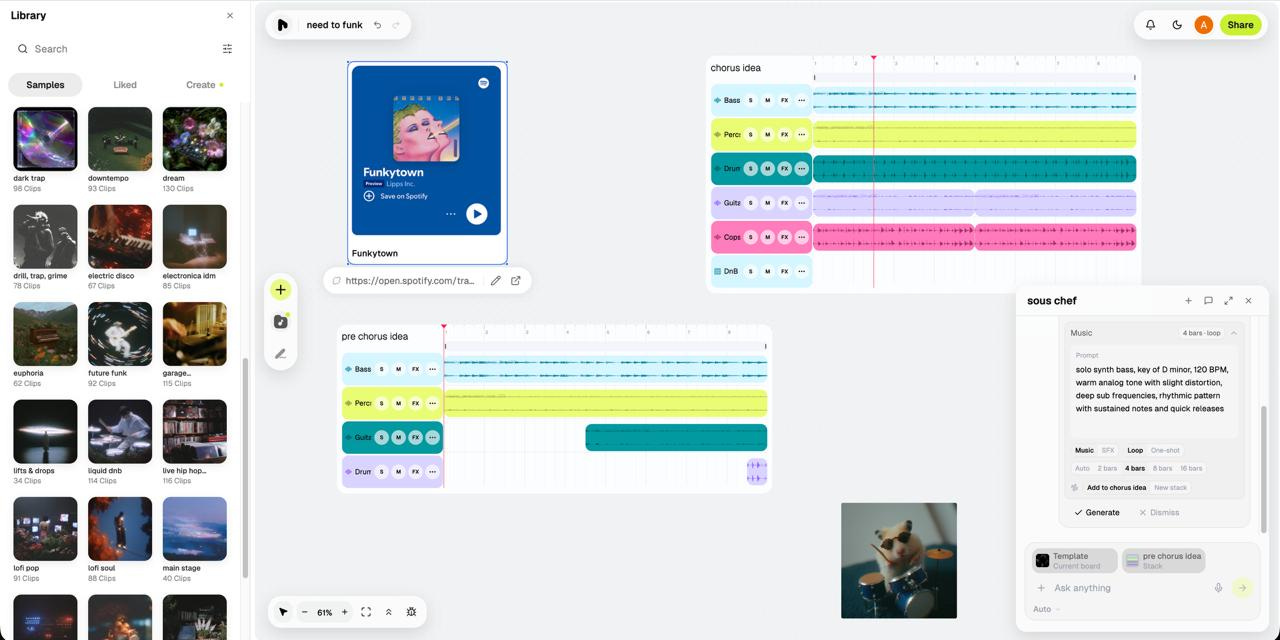
But the objective here is to make music; the Riffle founders say that it is a tool for “people with musical intent”. Not just musicians and producers, but people who want to make their musical ideas come to life with the flexibility and precision of professional tools without the learning curve associated with Digital Audio Workstations (DAWs) like Logic and Ableton.
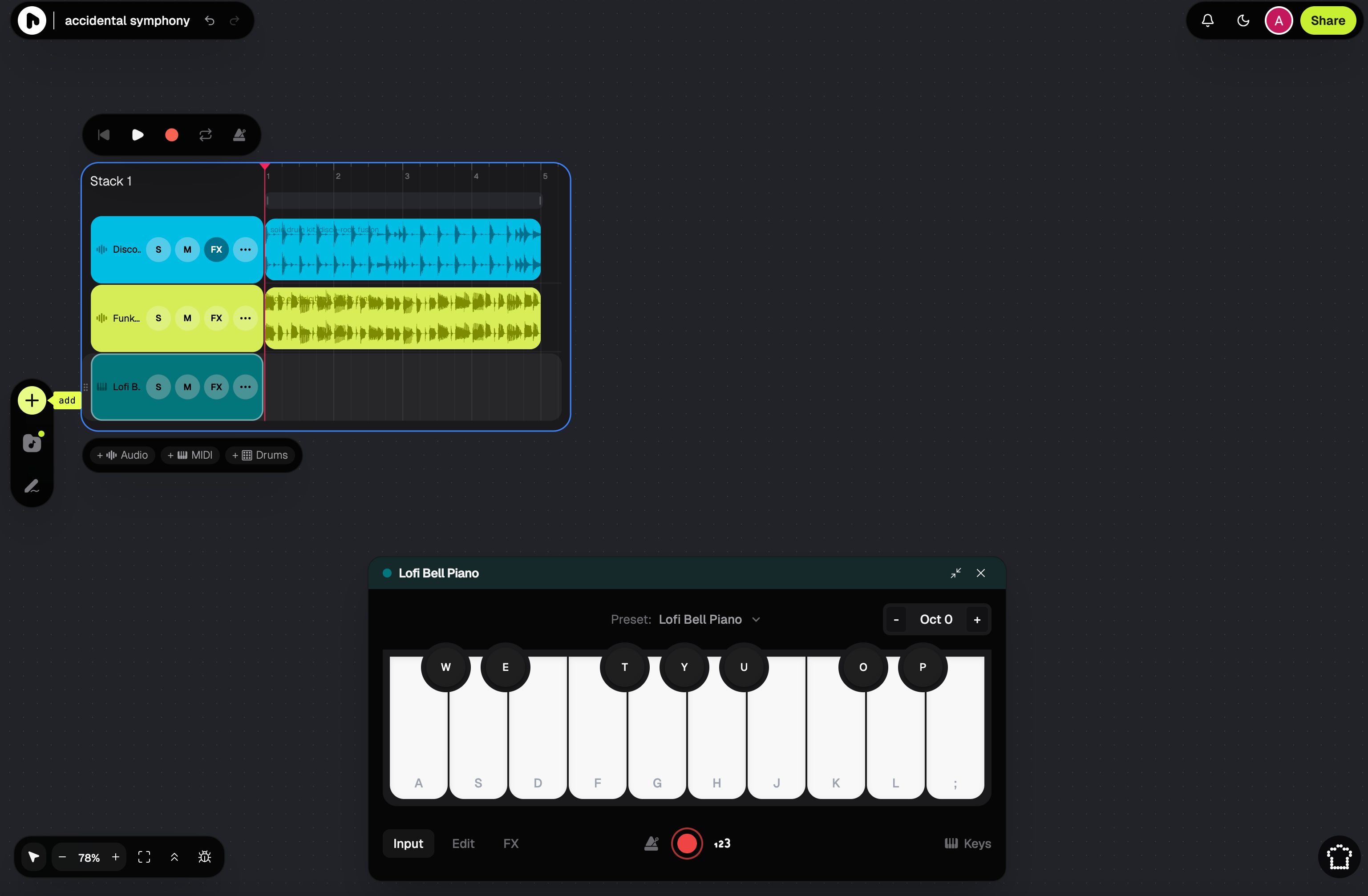
Given this vision, it’s no surprise that the central function of Riffle is to put sounds together. When you open the app, you can begin by plugging in physical instruments, recording your own samples, or choosing from a library of licensed sounds that Riffle put together.
They even built interfaces to play virtual instruments via the keyboard of your computer!
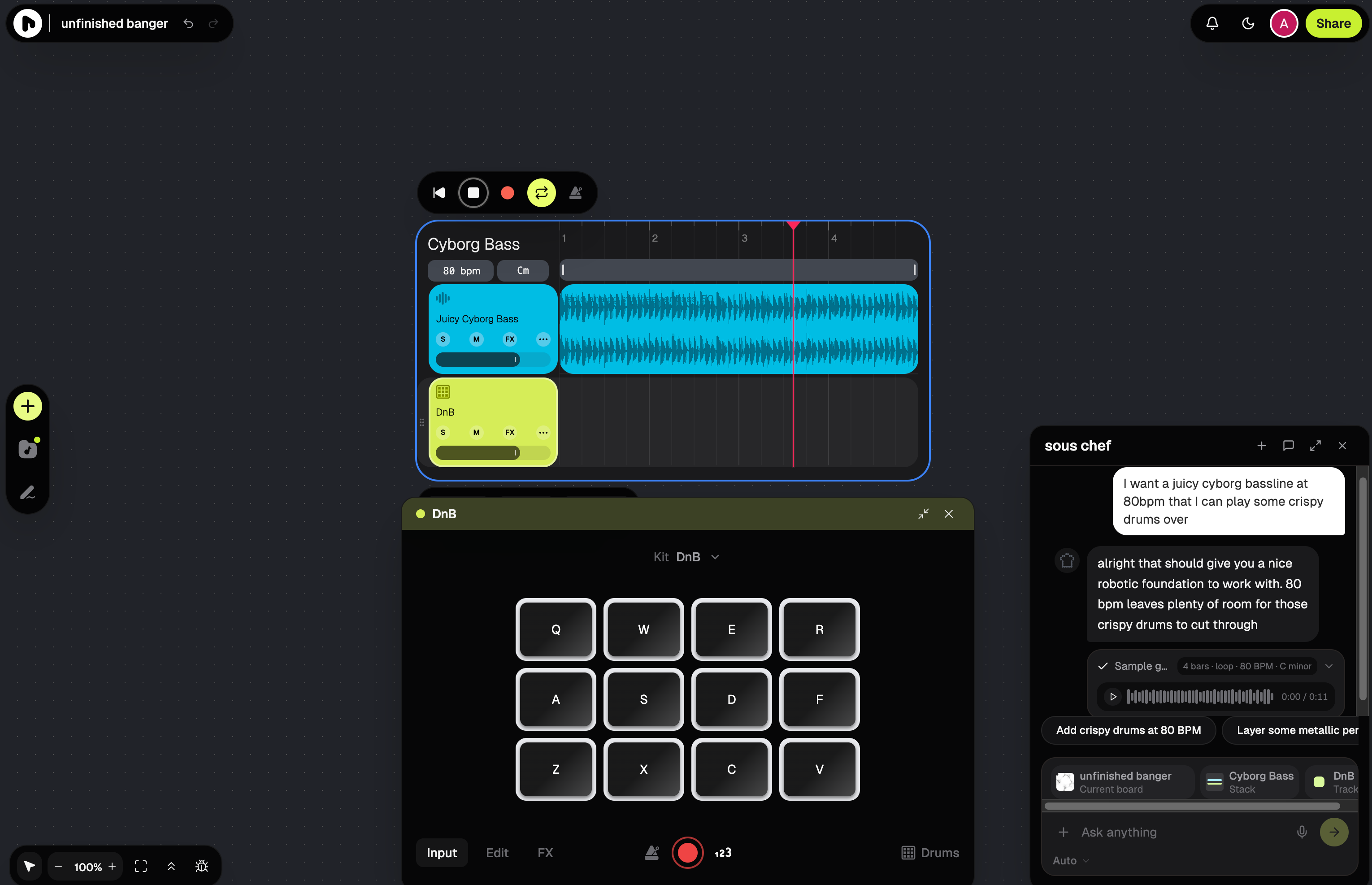
Then there’s Sous Chef, Riffle’s AI assistant. Critically, this is not a “type a prompt and get a song” situation. The founders are philosophically opposed to that. They call themselves “anti-slop.”
Sous Chef is exactly what the name suggests: you’re the chef, but it’s there to help you cook. You explain in natural language what kind of sound you’re feeling, and it whips up a sample that you can edit, either by adjusting the prompt or by layering on FX.
Behind the hood, Riffle pulls together the best audio-gen models to deliver clean, extensible samples that match your vibe. From there on, you can layer sounds, record your own voice, or add beats using the built in drum keypads.
Ultimately, you get some music that you and your friends have conceptualized, created, and exported for the world to hear.
Like this track I made about the banned NextUp India logo. Context: I really love this langur for this Substack’s logo, but I was vetoed :(
So yeah, this is Riffle. A fun, powerful, and beautifully crafted platform designed to facilitate musical creativity.
Where can you get it and what does it cost?
You can find Riffle at app.riffle.studio. Right now, it’s in early access; the team came out of stealth a few days ago and opened the doors to a couple hundred testers, with that number climbing to a thousand shortly. A wider launch is targeted for around April 21st, at which point the waitlist opens up to everyone.
Pricing is simple: a free tier and a pro tier at roughly $10-15 per month. The subscription goes towards the AI generation credits that power Sous Chef, the company’s main cost centre. But the founders are adamant about abstracting this away from the user. They don’t want you thinking about credits while you’re in flow.
You shouldn’t be asking yourself “should I generate this?”. You should just be making music. To quote the founders, “It’s a music company that uses AI, not an AI company that does music.”
Fun side note: you may not be able to find Riffle the product in the physical world, but you can find Riffle the company at a physical space off MG Road in Bangalore. And what a space it is. Their office, named The Draft, is one of the coolest offices I’ve visited in India.
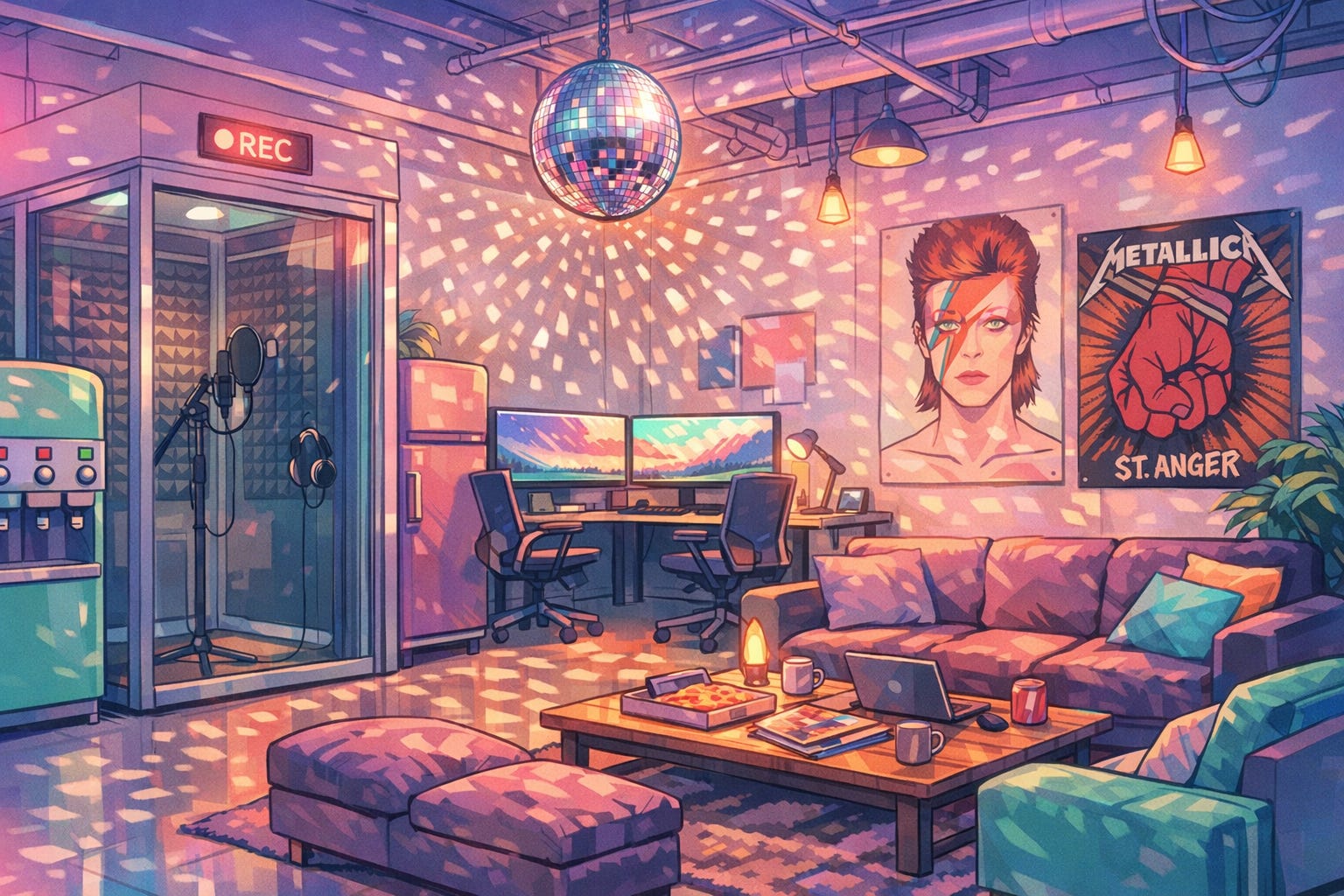
The space is beautiful and full of character, the fridge is stocked with a million kinds of drinks, and the office even has its own recording studio! Badass. 👨🏽🎤🎸🤘🏽
When was it launched?
Technically, it hasn’t been launched yet.
Riffle was founded in November 2024 and incorporated in January 2025. For the past year and a half, the team has been locked in, building. What you see now is an early access release which is only 60-65% ready.
The real launch, complete with a launch video, full social blitz, and waitlist opening, is targeted for April 21st.
Who founded it?
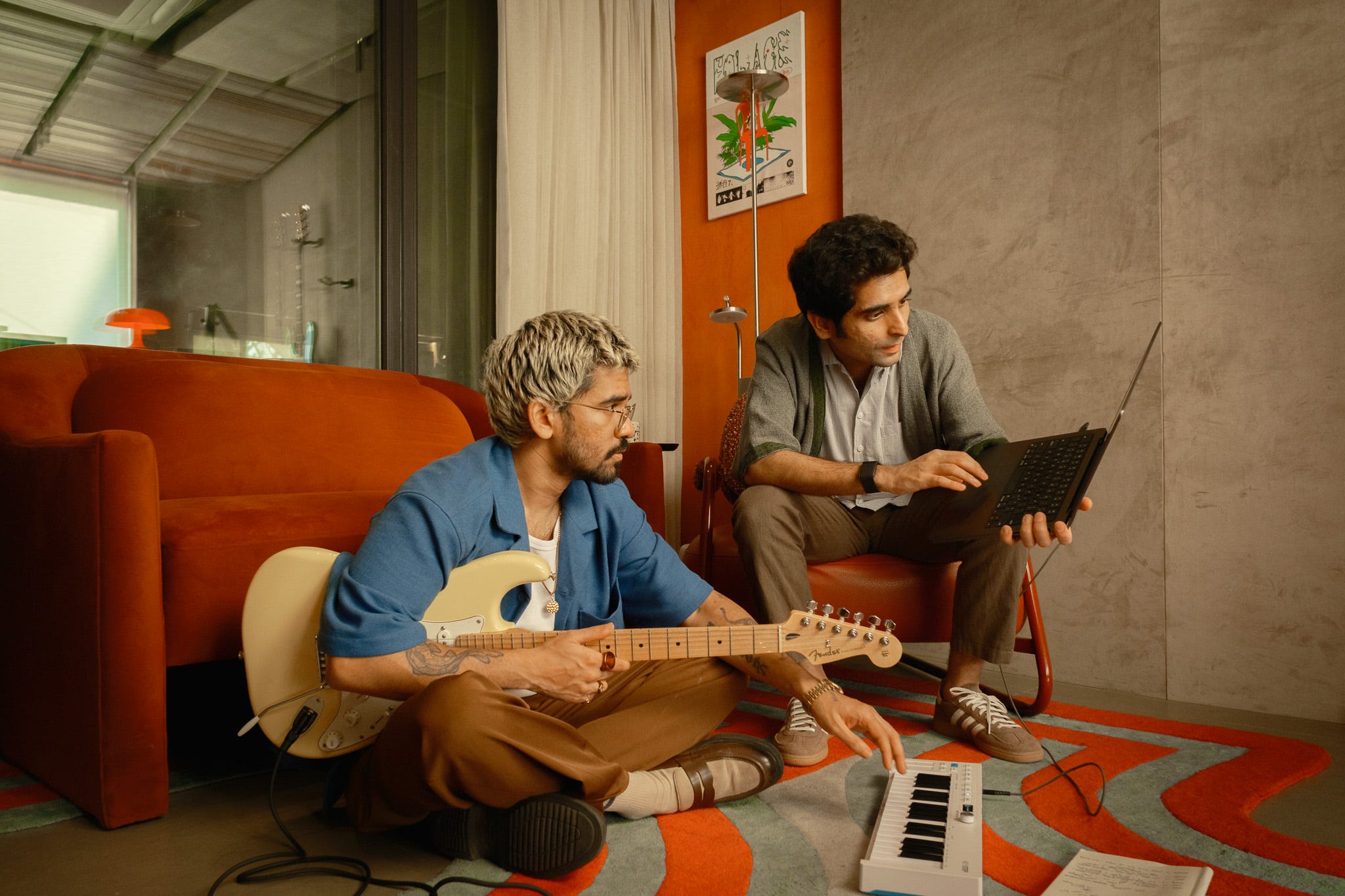
Two guys with very different backgrounds but a shared frustration with the state of the music industry.
Anurag grew up in Kolkata, where he started coding at the age of 10. His first creations were quiz games designed to insult people, which tells you everything you need to know. After graduating from UIUC in Illinois, he spent six years at Microsoft dreaming of starting up but grappling with the impostor syndrome that he was somehow unqualified to be a founder. To address this problem, he enrolled at UChicago’s Booth School of Business to cure his imposter syndrome. There, he realized that “everybody’s an impostor and no one really understands what’s happening.” Syndrome cured. Shortly afterwards, onhis 30th birthday, he packed up and came back to India to build from scratch.
Deo grew up in Bombay. I still don’t even know his full name, and every time I see him, he has a different shade of neon hair. What I do know is that this man has been making beats since before he could form sentences. In sixth grade, his teachers complained to his parents that he was destroying his teeth. Apparently, young Deo had mapped his molars as the kick drum and his incisors as the hi-hat and snare, and was making beats with his jaw in the middle of class. The rest of his story is equally interesting.
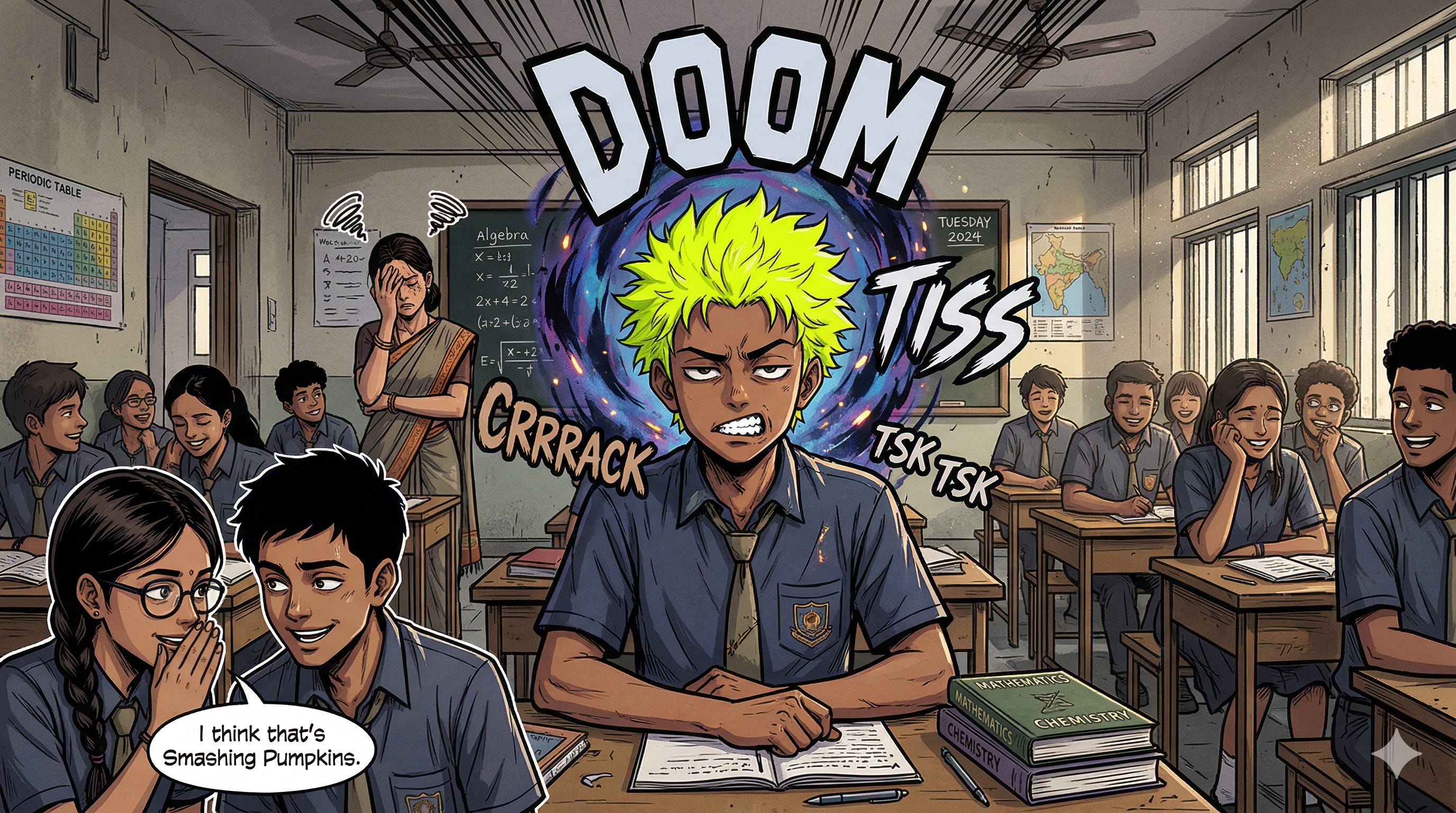
After learning to play the drums in a church at the age of eight, Deo taught himself the piano, guitar, and bass. What followed was a wild run through the Indian music scene: sneaking into his metal gigs using fake IDs, playing on the same bill as artists like Prateek Kuhad and PCRC, launching a label that helped put artists like Hanumankind on the map, running festivals, and eventually pivoting into a creative agency during the pandemic. Then he went to Goa, built a studio, and took a sabbatical. That’s when Anurag’s former co-founder connected the two. Three conversations later, they were building Riffle.
What ties them together, beyond their shared history as lifelong musicians, is a mutual realization that musical creativity was being stifled by subpar tooling. As they put it: “As brown kids, we’ve been told that everything is a discipline problem. Your music isn’t on Spotify because you don’t try hard enough.” They believed that for years. Then they talked to enough other musicians to realise: it’s not a discipline problem. It’s a tools problem. A lot of music is trapped, dying in a graveyard of voice notes and WeTransfer links because today’s music software isn’t built for how creative people actually think.
And thus, Riffle was born.
What’s the funding history?
Riffle has raised over a million dollars in an as-yet-undisclosed funding round.
Their lead investor describes itself as being “dedicated to the creative act of building companies We believe founders and startups are artists, not assets.”
Checks out.
Why does this product exist?
Because DAWs suck for creative people, and nobody’s had the guts to say it.
The traditional music production stack (stuff like Logic) is built for engineers. You open one up and you’re immediately staring at a grid of rigid horizontal lanes. That can be both daunting and limiting.
Creativity is different. It’s messy, scattered, and often seeks to break out of a rigid vessel. It’s “what if there’s a samba here” and “actually, maybe a duet over there” and six half-formed ideas floating around before one of them earns the right to become a track. Both founders knew this from experience - they’d look at the DAW and lose their motivation to actually make music. The software was actively getting in the way.
The breakthrough came on a road trip to Dharamsala. At that point, the team had actually built a fairly standard online DAW, a Figma prototype with timelines and lanes and all the usual furniture. Then they got to the mountains, looked at each other, felt a strong sense of freedom, and asked: “why does music have to live inside rectangles? Why can’t it be open like this”. So they scrapped the entire thing and started over with the infinite canvas.

Their philosophy towards AI is equally deliberate. Both founders are heavy users of Claude and Midjourney, so they know firsthand that AI is incredible when it amplifies your own thinking. So sous chef’s job isn’t to make your music. It’s to help you make your music. You’re the chef. It chops the onions.
Anti-slop. All the way down.
What does this product say about India?
A couple of things.
Firstly, we have taste.
There’s a lazy narrative that Indians are good at engineering but not at design. That we can build the backend but not the frontend. That we can code, but we can’t craft. Riffle is a direct rebuttal. This is a genuinely beautiful software product. The interactions are buttery, the details are considered, and the personality bleeds through every pixel. It feels like it was made by people who care about how things feel, not just whether they work.
And this is happening in a broader moment where Indian creative output is undeniable. If you haven’t had the privilege of listening to their work, check out Peter Cat’s music or just hit the play button above.
This band is leaving a mark on the music world and selling out shows around globe everywhere from Australia to Denver. At the same time, other indie acts like Seedhe Maut, Baalti, and Mali, serve up fresh and inspiring sounds.
On the more mainstream side of things, Hanumankind dropped a Big Dawgs remix with A$AP Rocky, played Coachella, and peaked at #9 on the Billboard Global charts.
Indians aren’t settling for consuming global culture anymore, we’re making it.
Secondly, the “build from India, for the world” playbook is maturing.
Riffle is a (largely) Indian team1, incorporated as a Delaware C-Corp, funded by a Brooklyn-based VC, building a product with no geographical borders. This pattern isn’t new, but it’s accelerating.
Here’s a stat that doesn’t get enough airtime: Indian O-1 visa issuance - the “Einstein visa” - went from 408 in 2016 to 1,632 in 2025, a 300% increase over the decade. That’s the largest percentage growth of any country in the top ten. While everyone argues about H-1Bs, thousands of Indian founders and builders are quietly qualifying as “aliens of extraordinary ability” and setting up shop in the US.
I don’t know whether the Riffle founders have the O-1 or plan to get one. But the path - build in India, raise US capital, incorporate in Delaware, eventually establish a US presence - is becoming a well-worn trail. And as that trail gets more traffic, the gap between “Indian startup” and “global startup that happens to be built by Indians” is going to disappear entirely.
My take
This company hasn’t even formally launched yet. The product is still being built. There’s a real risk it fails to find its market.
But this industry that we all inhabit - the industry of entrepreneurship and venture capital - is built on risk. And I feel like we sometimes forget that.
By all means, let’s venerate entrepreneurs. But our praise shouldn’t be reserved only for those who have reached the summit. What about the climbers standing at the bottom, staring up at the sheer, intimidating cliff face? They deserve support too, especially the ones who are trying something new.
The music category is a graveyard for startups. Dozens of companies have come before, built beautiful products, and failed to build enduring businesses. I’ve backed one of them, a social music discovery app called Humit. It was one of the most gorgeous, fun consumer apps I’ve ever used. It just didn’t catch on. The founders all work different jobs now. But they can and do hold their heads high, because they dared to be different, brought beauty into the world, and went out on their shields.
Riffle’s founders know all of this. They know the odds are slim. They know the capital machine doesn’t favour them. They know the climb is lonely and torturous.
But they’re choosing to do it anyway. Because anything is possible when you have a dream and the balls to go after it.
If founders didn’t ever try something radically different, we would just regurgitate the same old tired ideas again and again. Life would suck.
And who knows, Riffle could upend the status quo and usher in a new era of creativity in music. I certainly wouldn’t bet against them.
That’s why they have my support and goodwill, and they deserve yours too. An easy place to start is upvoting their launch on Product Hunt.
So, finally, let’s offer an Ode to the Climbers.

If you enjoyed this post from Next Up India, you might like our other India-focused media brands too. Learn more about the coolest things happening in the Indian startup ecosystem at Tigerfeathers and Runtime BRT.
And if you want to contribute one of these yourself or shout out a product you loved, get in touch and get involved🫡
They have engineers in Germany and Canada, too.