
NUI#9 - Manam Chocolate
Before The Bean, Beyond The Bar: On cacao, colonialism, and the long way into India's chocolate heart

When we did our 2025 year-end round-up at Tigerfeathers, one of the charts that made it onto the list featured ‘tech that’s reached its final form’, with this accompanying image:

For the (much contrived) opening to this week’s edition of NUI, allow me to present a riff on that image, this time featuring ‘Consumer packaged food items from India that have reached their final form’:
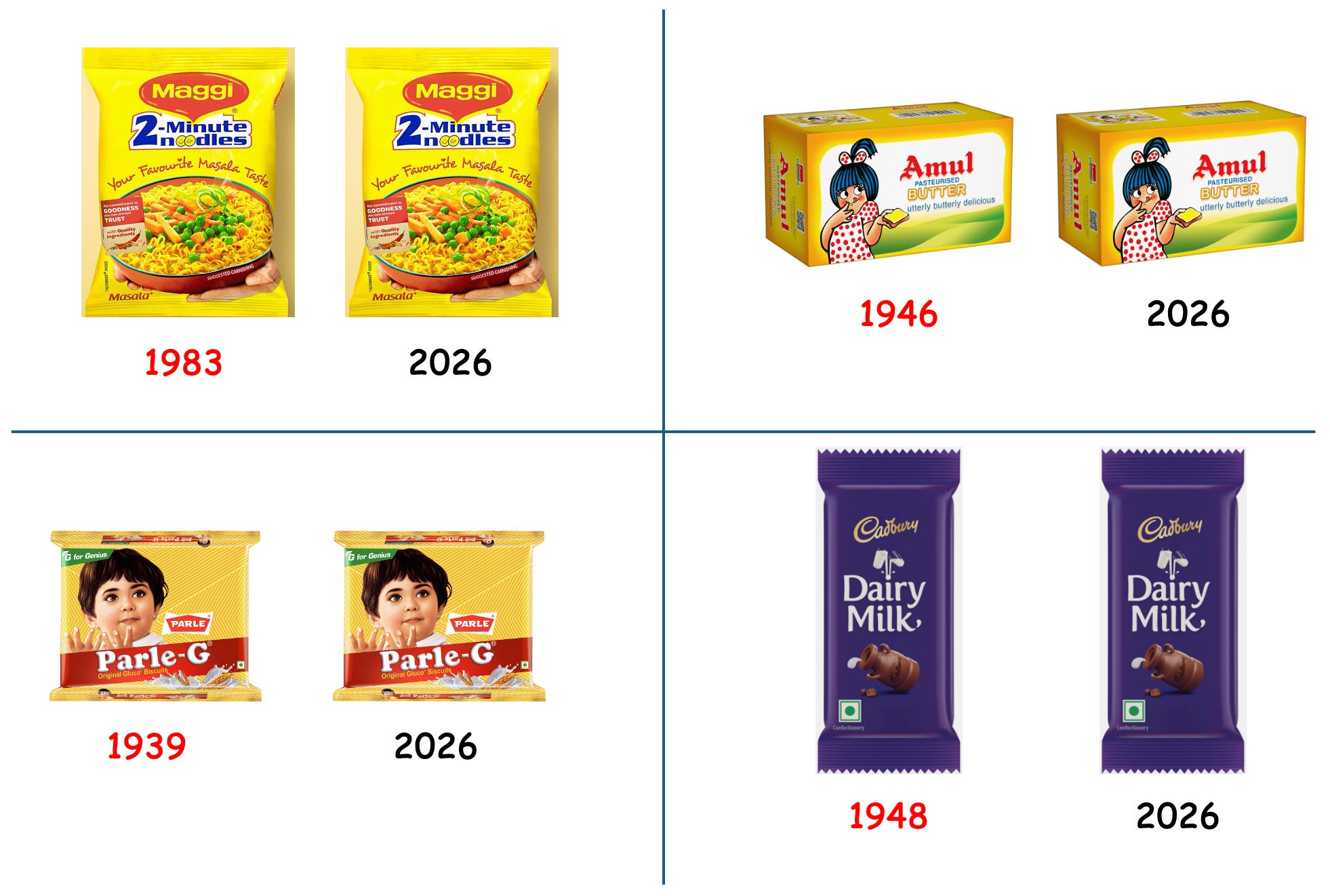
If you think some other product deserves a spot in this matrix, YOU’RE WRONG that’s cool, you’re entitled to your opinion. I would argue that the history of each of these companies in India (and the lasting power of their signature products) is rich enough to merit its own essay. For today’s purpose though, I’d like to draw your attention to the bottom right quadrant.
For India’s pre-Instagram generations, the word ‘chocolate’ and the colour purple tend to hit the prefrontal cortex at the same time.
And while Dairy Milk has absolutely earned its place in several generations of Indian hearts, that purple wrapper is also the most successful act of misdirection in Indian consumer history. It made a British product feel Indian, a foreign ingredient feel familiar, and a colonial supply chain feel like part of the furniture. Not to mention that somewhere between the wrapper and the cacao pod sits a 200-year story that most people who eat ‘Indian’ chocolate have never encountered before.
Chocolate came to the Subcontinent the way most things did: as someone else’s idea, for someone else’s purposes. The cacao plant is native to Mesoamerica, was sacred to the Aztecs, and was seized by Spanish conquistadors in 1519. It reached England by the 1650s, and by the time it arrived in India, in 1798, it came not as a gift but as a colonial agricultural experiment: the British established eight cacao plantations in Courtallam, Tamil Nadu, planting a delicate Central American variety called Criollo - fine-flavoured, revered in its homeland, and entirely unsuited to the Indian climate. The experiment failed quietly and was largely forgotten.
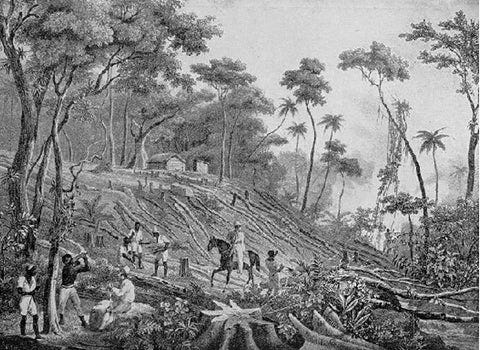
When cacao made its second attempt at India, over a century and a half later, it did so under very different terms. In 1965, Cadbury set up a demonstration farm in Chundale, Wayanad, and began what would become the foundation of India’s commercial cacao industry. This time around the delicate Criollo was replaced with the Amazonian Forastero, a hardier, higher-yielding variety that Cadbury worked with Kerala Agricultural University to breed into an even more productive hybrid by 1987. Forastero produces more cacao more reliably and with less fuss. What it doesn’t produce is nuance i.e. the trees were bred for good yield and not for good taste.
By then, Cadbury had already been in India for seventeen years, having arrived in July 1948 a few months after Independence. The company had set up its headquarters in Mumbai and began operations by importing chocolate from Britain. The bar it brought with it - the iconic Dairy Milk (launched in England in 1905) - was itself a product of competitive ambition.

At the time, the Swiss dominated milk chocolate; Daniel Peters and Henri Nestlé had cracked the formula using condensed milk decades earlier. George Cadbury Jr’s answer was to use fresh liquid milk instead, a genuine technical achievement that produced a smoother, creamier bar that undercut the Swiss in texture and taste. In Britain, it worked spectacularly. In India in the 1950s, it was an expensive curiosity, competing against a market built on mithai. It was broadly seen as a treat for children and the urban elite, as well as the English-educated consumer class that had acquired a taste for it under colonial rule.
Cadbury’s legacy wasn’t just introducing the Dairy Milk to India, however, it was the implanting of the entire supply chain itself. The move into cacao cultivation in Wayanad in 1965 was less about building a chocolate culture and more about reducing dependence on imported raw material, which is why the workhorse Forastero made perfect sense as the variety of choice. The consequence was that India’s cacao crop was, from the very beginning, predicated on industrial genetics grown for industrial purposes, optimised for fat, volume, and consistency rather than deep or complex flavour. In this industrial model that prioritises tonnage over taste, the job of nurturing flavour rests with the factory and not the farm. It is added later on through heavy roasting, additives and processes, aiming to get the same output every single time. The quality of the cacao is almost beside the point.
This foundational act of agricultural pragmatism would define India’s relationship with chocolate for decades. The downstream effects were subtle but profound. For most Indians, chocolate wasn’t a thing you ate, it was a flavour - an ingredient.
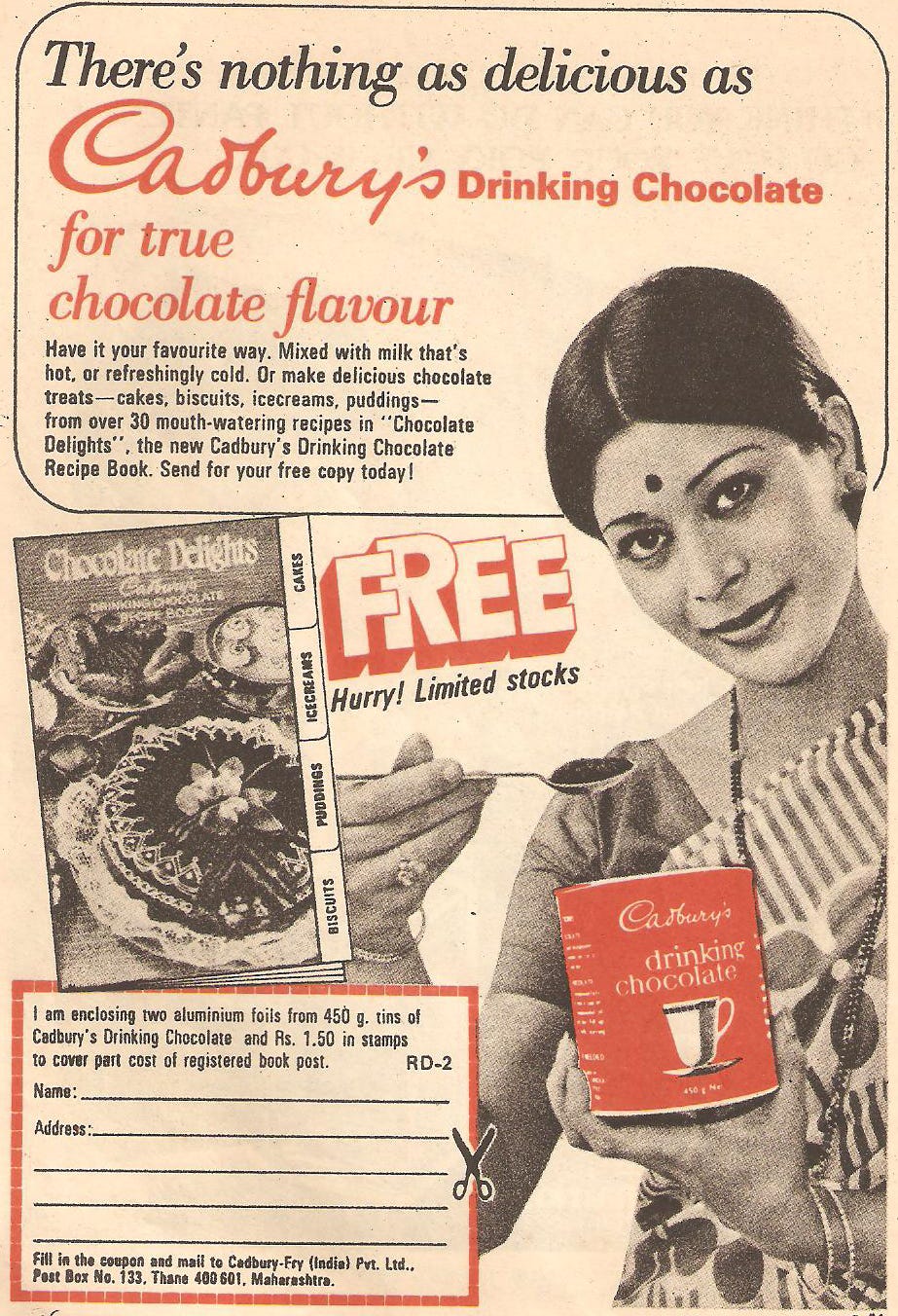
It showed up in chocolate cake, chocolate ice cream, chocolate-flavoured Bournvita in the morning. The bar itself was an afterthought. And when it wasn’t, it was a Dairy Milk (and even that was thought of more as a treat than a habitual indulgence). Chocolate, as a category, was thin.
Then came 1991. Liberalisation opened the Indian economy and, with it, the Indian chocolate market. Nestlé’s KitKat arrived. Ferrero Rocher followed, positioned as an aspirational gift, a foreign luxury you bought at the duty-free or gave to someone you wanted to impress. Mars, Toblerone, Lindt - slowly, the shelf expanded and the field widened, elevating chocolate from a single-brand category into something resembling a market. Cadbury responded not by ceding ground but by doing something more interesting: it changed the meaning of Dairy Milk entirely.
Working with Piyush Pandey at Ogilvy - a partnership that would last decades and produce some of the most recognisable advertising in Indian history - Cadbury convincingly repositioned the bar from a children’s treat into something adults could desire openly. The campaigns that followed were a systematic, decades-long project to insert Dairy Milk into the emotional vocabulary of Indian life.
The word meetha did the work. Rather than selling chocolate, it said that ‘this’ belongs here. Every occasion that once called for mithai - celebration, exam results, festivals, auspicious beginnings - was now also an occasion for Dairy Milk. The bar did more than win the nascent market, it basically became the market. Today Cadbury controls roughly 65% of India’s chocolate industry, and Dairy Milk alone holds over 40% of it…
…which is precisely what makes any attempt to build a rival chocolate brand in India such a daunting proposition.
You are not competing with a product. You are competing with a memory, a cultural institution, something that several generations of Indians have an entirely uncomplicated emotional relationship with. You cannot just waltz in and usurp The People’s Chocolate of India - the brand optimised for mass market legibility and maximum reach - as the thing people think of when they think of chocolate. The obvious move - the safe move - would be to carve out a niche somewhere nearby. A slightly more premium bar. A fancier wrapper. Some sea salt, some ~single-origin~ verbiage borrowed from the coffee world, the appearance of craft without the burden of actually building it. That’s what most people entering the Indian chocolate market have done. Buy the couverture (high-quality professional-grade) chocolate from one of the handful of multinationals that dominate global supply. Melt it, mould it, put your name on it, and call it yours. Don’t mess with the book too much, just change the cover. Relatively straightforward.
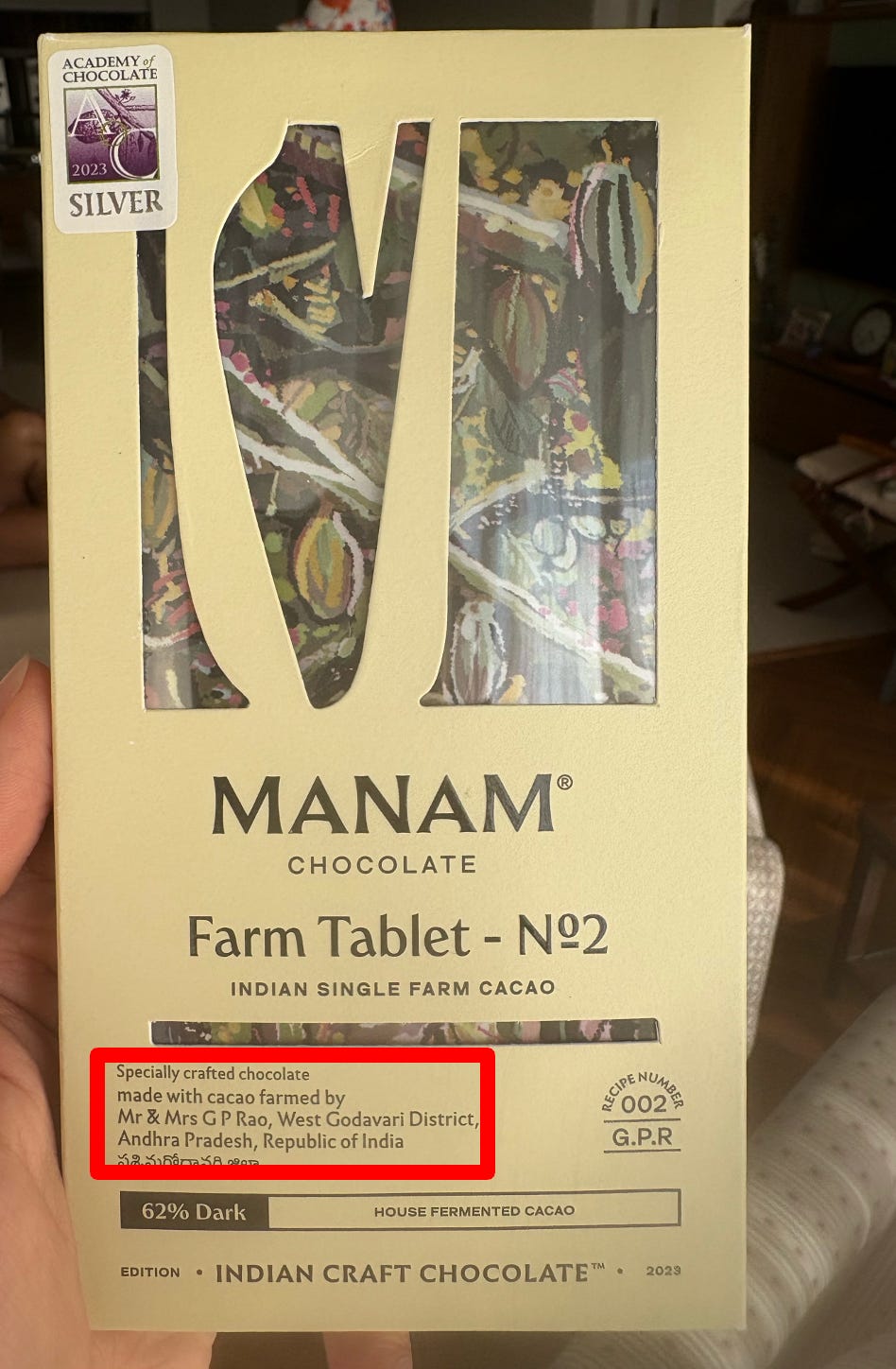
Then again, if you were the kind of person who looked at India’s two-hundred-year relationship with cacao - always the grower, never the craftsman; always the market, never the origin; always on the receiving end of someone else’s supply chain - and saw not a context to operate within but a script to rewrite, you would try to find a very different route into India’s chocolate heart. This one would contain no shortcuts, and make no obvious commercial sense to any reasonable onlooker. The voyage might take you far upstream, past the store, past the market, past the factory, past the farm, all the way to the fruit, the farmer, the fermentation box, the flavour precursor in the pulp of a cacao pod growing in West Godavari. It would give you a visceral understanding of why the only honest way to build something genuinely new in Indian chocolate was to start where no one had started before. Not with a better wrapper. Not with borrowed Belgian couverture and a good story. But with the land, the genetics, the science, and the slightly obsessive, stubborn conviction that India’s chocolate story deserved a completely different premise - this time built on flavour and identity and the radical idea that the best chocolate in the world might actually grow here.
What you would build, at the end of all that, wouldn’t just be a chocolate brand. It would be an argument, that ‘Indian’ chocolate, grown here and made here with genuine craft and intent, is not something India receives from the world but something it gives to it - a reversal of the historical order from foreign chocolate being imported and sold to India as something aspirational, to Indian chocolate being offered to the world as something exceptional. That brand itself though, would look a lot like Manam Chocolate.
What is it?
Manam Chocolate is an Indian craft chocolate brand based in Hyderabad.

‘Manam’ is Telugu for ‘we’ or ‘us’. The business has two parts: Distinct Origins, which works directly with cacao farmers in Andhra Pradesh’s West Godavari district (procuring fruit, fermenting, and processing it into fine-flavour cacao beans) and Manam Chocolate, the consumer brand, which turns those beans into 300-plus products across 50 categories, sold through experiential stores in Hyderabad and Delhi, online, and at airports.
(Fair) Price?
I ordered three products to try for this piece -
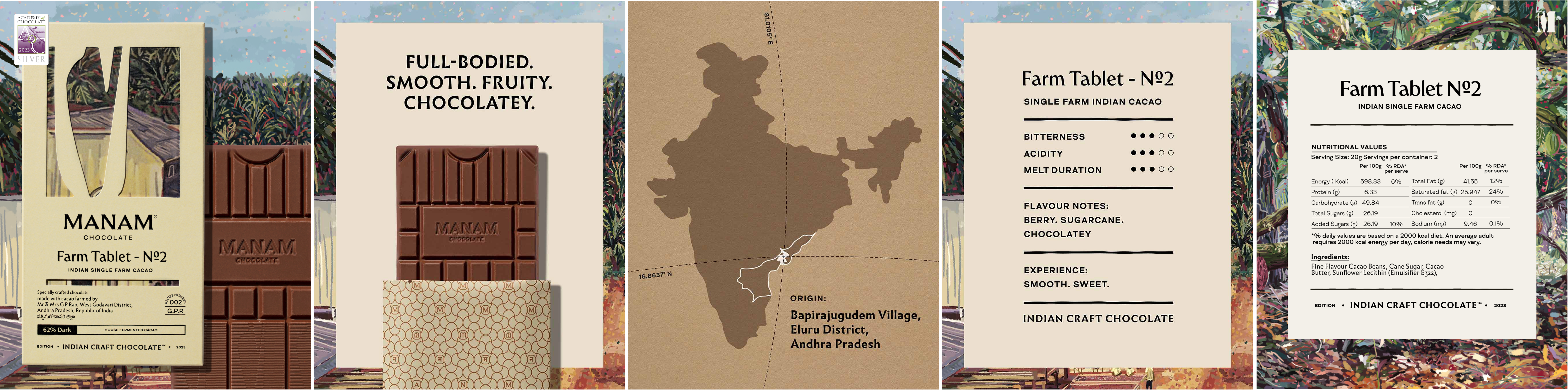
1. Farm Tablet No. 2 - 62% Dark
2. Chai Biscuit Inclusion Tablet - 43% Malt Milk
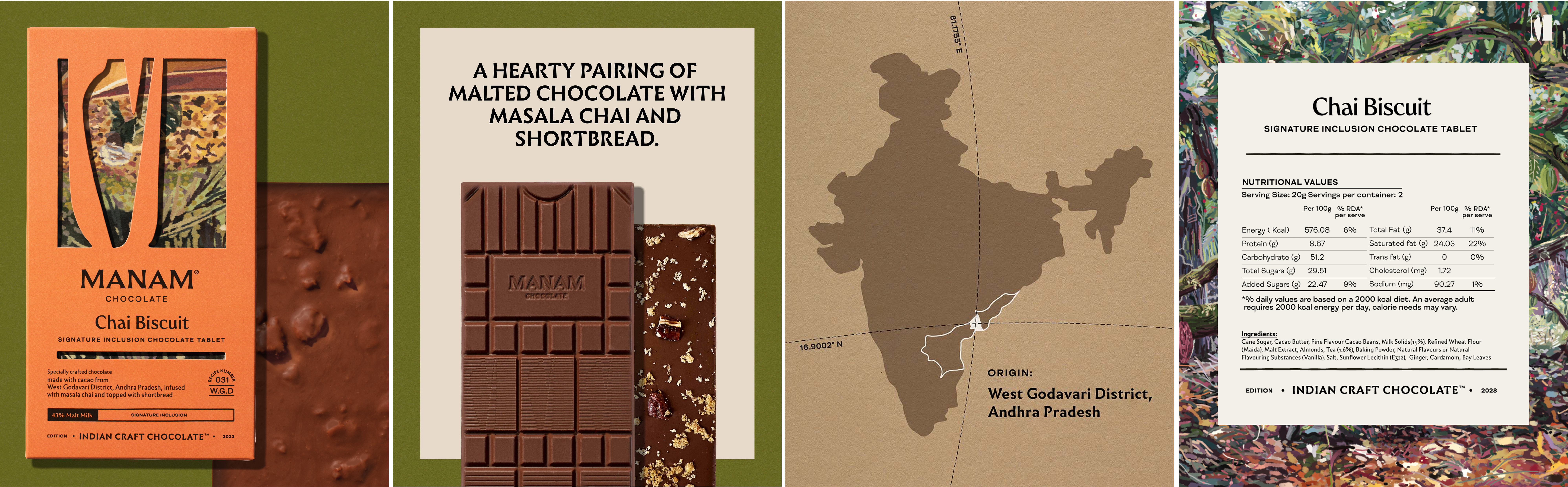
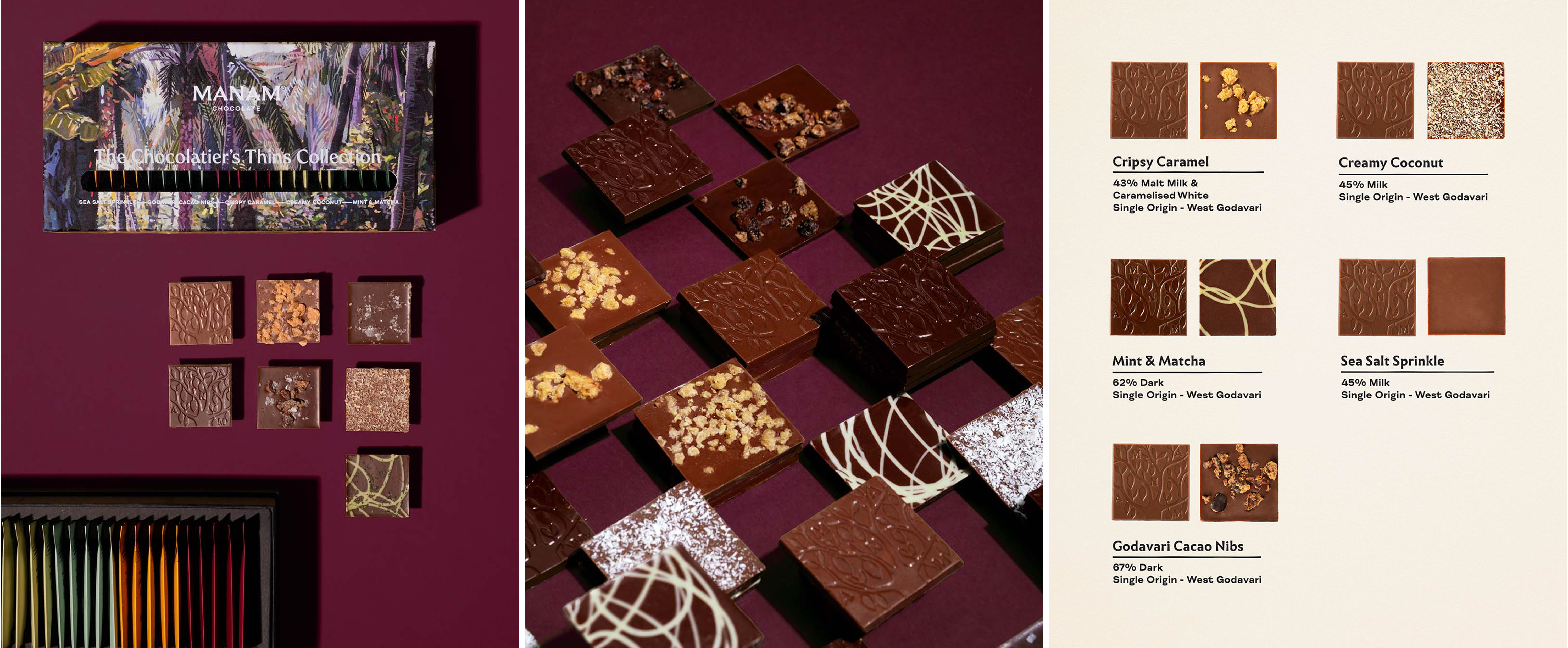
3. The Chocolatier’s Thins Selection
And this was the damage:
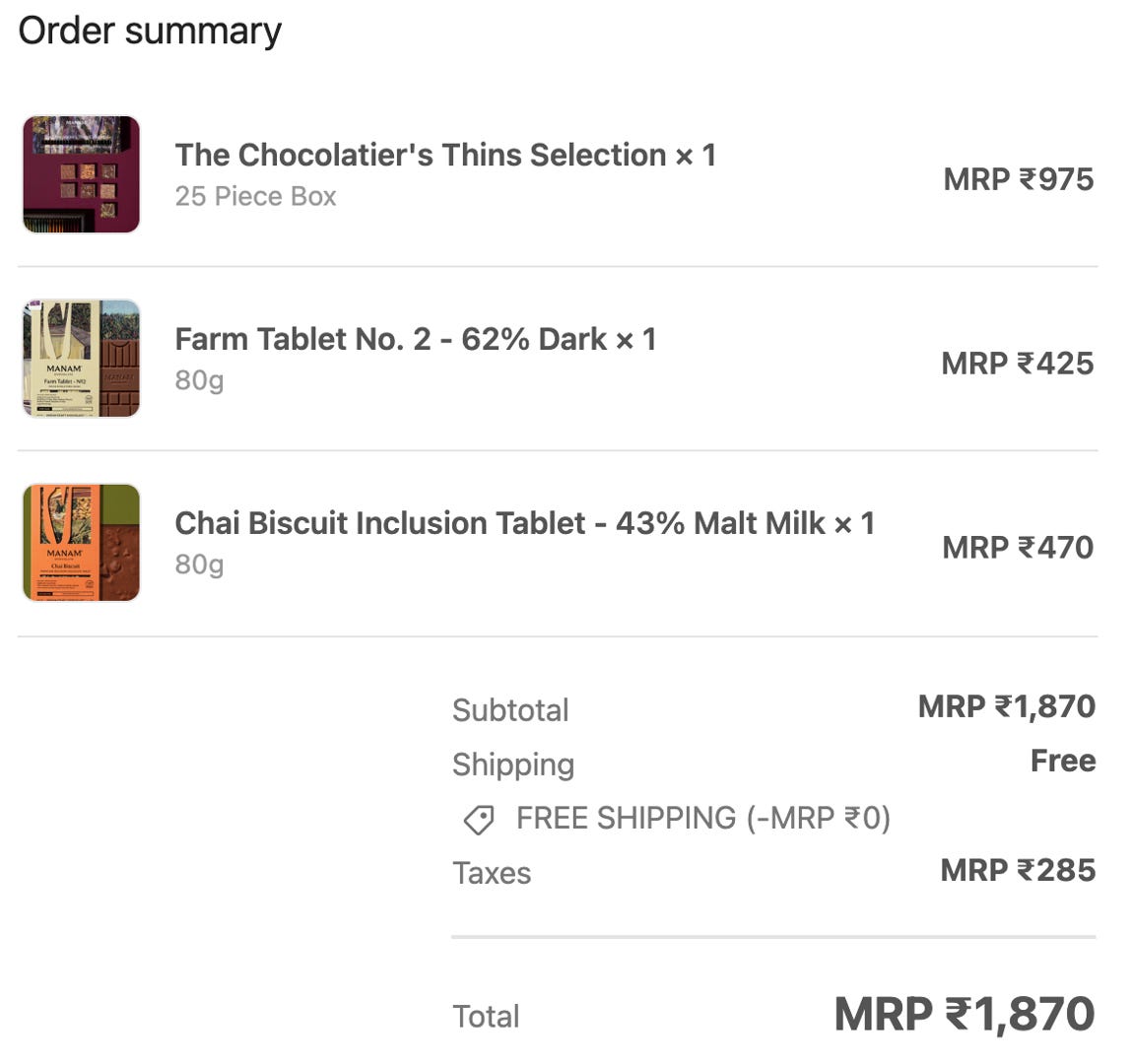
As with all things, Manam Chocolate is confident enough in its quality, taste and proposition that they’re pricing their products at par with any other ‘premium’ foreign chocolate brand. A single-origin tablet (their fancy term for chocolate bar) starts at around ₹400-500, roughly what you’d pay for an imported Lindt bar except, as I’ve come to understand, that Lindt bar carries a 30% import duty and is made from bulk commodity cacao sourced from West Africa. Manam’s founder Chaitanya Muppala is characteristically direct about this pricing equivalence. He says that “If it’s Indian, why are you charging Swiss prices?” is the question he hears most often, and he considers it a vestigial colonial hangover i.e. the automatic assumption that anything made here must cost less. His answer is that the premium is justified not despite being Indian but because of it - higher farmer payouts (25-30% vs 6-10% in industrial commodity cacao), genuine “fine-flavour” beans, and a supply chain built from the fruit up rather than the couverture bag down.
I should also say, that when I reached out to the company to request an interview with Chaitanya for this piece, the Manam Chocolate team was kind enough to send me a gift box too.
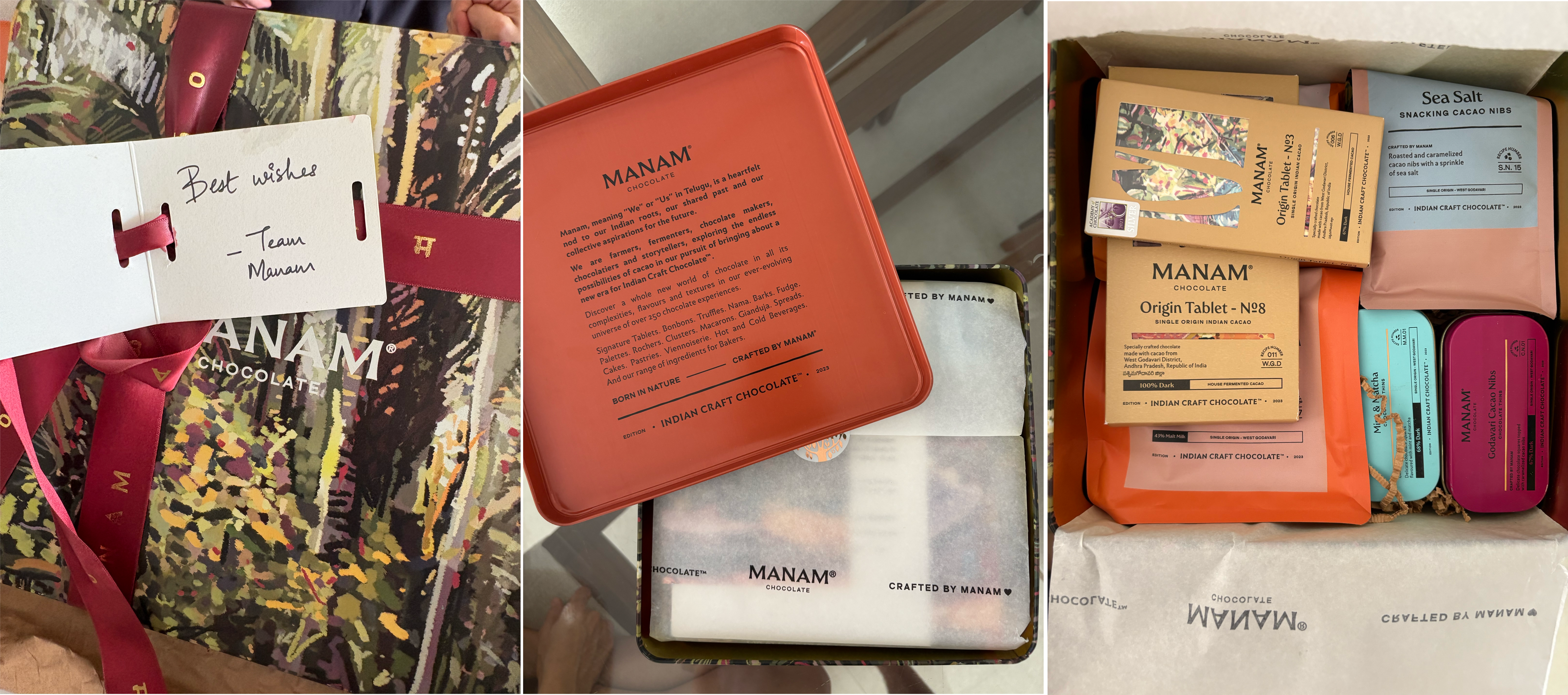
If you’re worried that this might have somehow compromised the objectivity of my review, don’t worry, it would take a lot more than a box of award-winning 100% single-origin dark chocolate, hand-finished bonbons, and sea salt cacao nibs resting in a handsome tin and wrapped in packaging so good it made me feel underdressed, to buy my opinion. I was, and still am, a picture of objectivity. The box is empty. These things are unrelated.
Where did I buy it?
Directly from their website -
But if I was in Hyderabad, I’d have picked it up from the flagship Manam Chocolate Karkhana on Road No. 12, Banjara Hills - a 10,000 sq ft working chocolate factory, retail store, café, beverage bar, and classroom rolled into one. It opened in August 2023 and - the legend goes - caused enough of a traffic jam on launch day that the police had to shut it down for three days. It was voted onto Conde Nast Traveller’s list of the best restaurants in India in 2024, and named as one of the World’s Greatest Places by TIME Magazine in the same year.

Same for Delhi, where they launched a similar experience centre last year, and follows the same full-stack experiential model as Hyderabad. Notable addition: literal pipes of liquid chocolate running through the ceiling - 67% dark, milk, and 40% creamy white - tapped off to the patisserie, beverage bar, and in-store stations. Over 30 chocolate-based drinks on the menu. You can also track the beans in any bar you buy, via QR code, back to the specific farm in West Godavari they came from. Demonstrating, uh, an astute understanding of their target market, they created a special edition chocolate cake for the Delhi crowd called DMW - containing dark, milk, and white chocolate - because “In Delhi, people come in BMWs”.

When was it launched?
Manam Chocolate was launched on 15th August - Independence Day - 2023, but the groundwork started in 2021, when Chaitanya first incorporated Distinct Origins and began the three-and-a-half year process of building the farmer network, the fermentery, and the supply chain that Manam would eventually sit on top of.
Who founded the company?
Manam Chocolate was founded by Chaitanya Muppala, a Hyderabad-based second-generation food entrepreneur whose family has been in the sweet business since his father founded Almond House - a beloved Hyderabad mithai brand - in 1989.
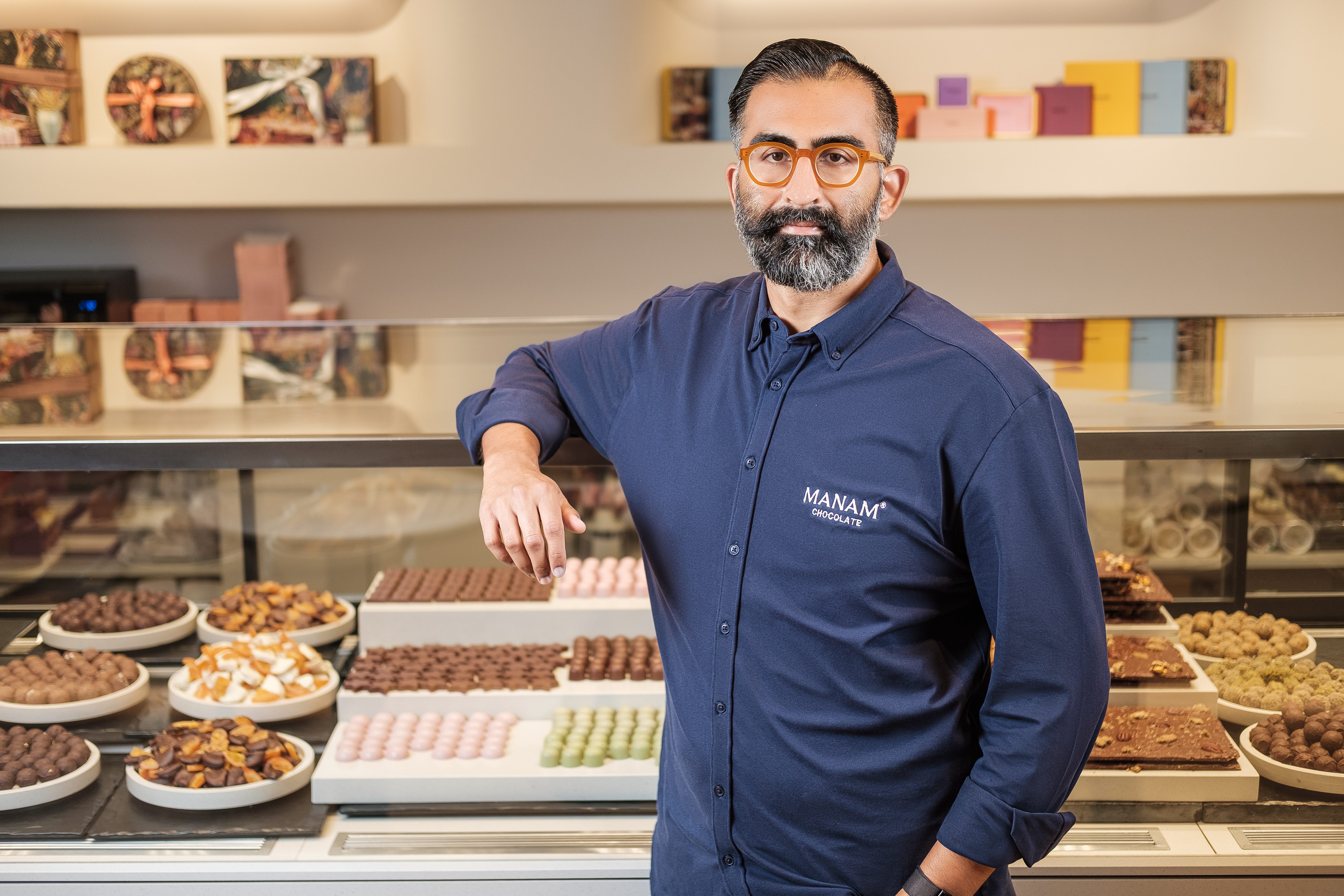
Chaitanya took over in 2013, scaled it from a single shop to a 14-store operation, and spent a decade building a ‘house of brands’ across gelato, street food, and premium bakery before a question from his gifting customers propelled him into a multi-year quest to unlock the potential of Indian cacao.
State of Funding
Largely self-funded to date. Almond House (the family business) has put $4 million of its own capital into building Manam Chocolate and Distinct Origins. Manam has also raised an undisclosed amount from family offices and angel investors. Per public reporting, the company is currently in the process of raising its first institutional round.
Why does this product exist?
“Chocolate was always grown in a colony and consumed by the coloniser” - Chaitanya Muppala
Chaitanya Muppala is, by his own description, a halwai. A couple of decades after Almond House had planted its flag in Hyderabad, a quarter of the family’s business was coming from gifting - occasions, festivals, corporate orders - and customers were increasingly asking for chocolate products. The obvious move was to do what everyone else in the Indian market was doing: buy couverture, melt it, mould it, put your name on it.
He mapped the landscape and found that every brand of any scale - artisanal or otherwise - was buying from the same two or three multinational sources. Most of it wasn’t even real chocolate - it was ‘compound’, with the cacao butter replaced by vegetable oil or palm oil. “If everybody is going to buy the same primary raw material and make the same set of products,” he says, “it’s going to end up becoming a very homogeneous product mix - very much like how mithai has become.” He’d watched that happen in his own category. He wasn’t interested in presiding over the same outcome in chocolate.
So instead of asking how to enter the market, he started asking where the chocolate actually came from. That question led him to a cacao farm in West Godavari and kicked off a three-year immersion in the history, economics, and agronomy of Indian cacao. What he found was a genetic problem that nobody had ever seriously tried to solve. The trees growing across India’s cacao farms had been planted for industrial purposes since the 1960s - optimised for yield and fat content, never for flavour. And because they’d been seed-propagating freely for sixty years since, even the genetic integrity of those original industrial varieties was long gone. “No cacao tree on any Indian cacao farm is similar to the one sitting next to it,” he says. “I describe it as a genetic orgy.”
There was no identifiable origin character, no consistent flavour profile — nothing for a craft chocolate maker to work with. (FYI ‘Craft’ chocolate is to industrial chocolate what specialty coffee is to Nescafé, or what single malt whisky is to blended - made in smaller batches, from carefully sourced ingredients, where the origin and process are considered part of the product itself, and all the decisions are made in service of flavour, not volume).
Most people in his position would have imported their beans from Ecuador or Vietnam and moved on. He concluded instead that the problem was fixable through post-harvest technology, and that fixing it was the most genuinely challenging and thus interesting thing to do. (The longer-term fix - bringing entirely new fine-flavour cacao genetics into India through government quarantine and university breeding programmes - is a separate, parallel project that he estimates will take twelve years from start to finish. This is already underway too).
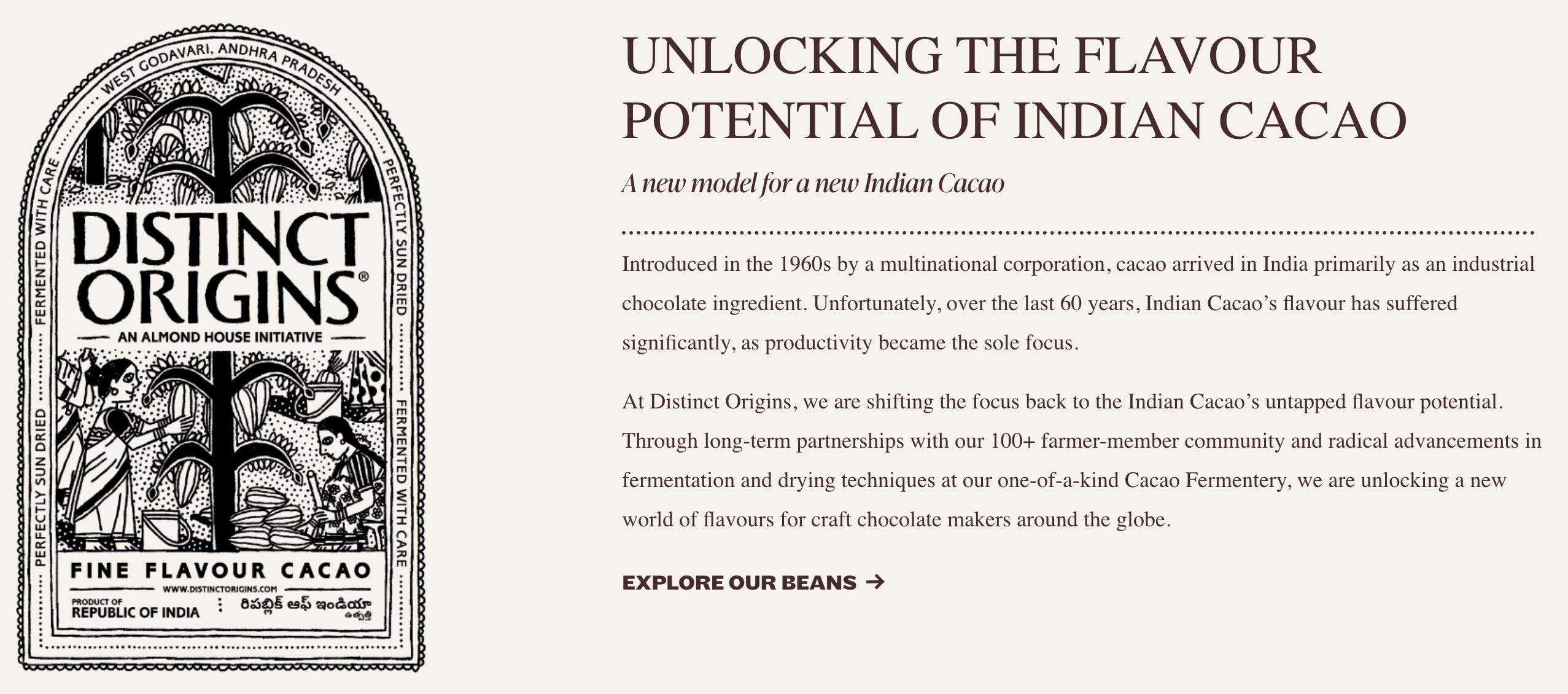
Distinct Origins was born not from a masterplan but from curiosity and first principles thinking. “What is chocolate? How do we do it differently? Oh, it can be made? So how do we make it well? What’s the nearest bean-growing region?” That initial line of inquiry led Chaitanya to eventually landing on a farm in West Godavari, down a rabbit hole to learn whatever there was to learn about cacao farming.
“The enterprise was never predetermined,” he told me. “We were just halwais who wanted to make chocolate. This is all work. You start somewhere then you keep going and give it shape.” Distinct Origins is the shape that emerged: India’s largest fine-flavour cacao fermentery, housed in a converted 70-year-old tobacco warehouse in Tadikalapudi, where Manam starts not at the bean but at the fruit - processing, fermenting, and drying cacao in a way that coaxes out the flavour complexity that Indian cacao had never been asked to express.
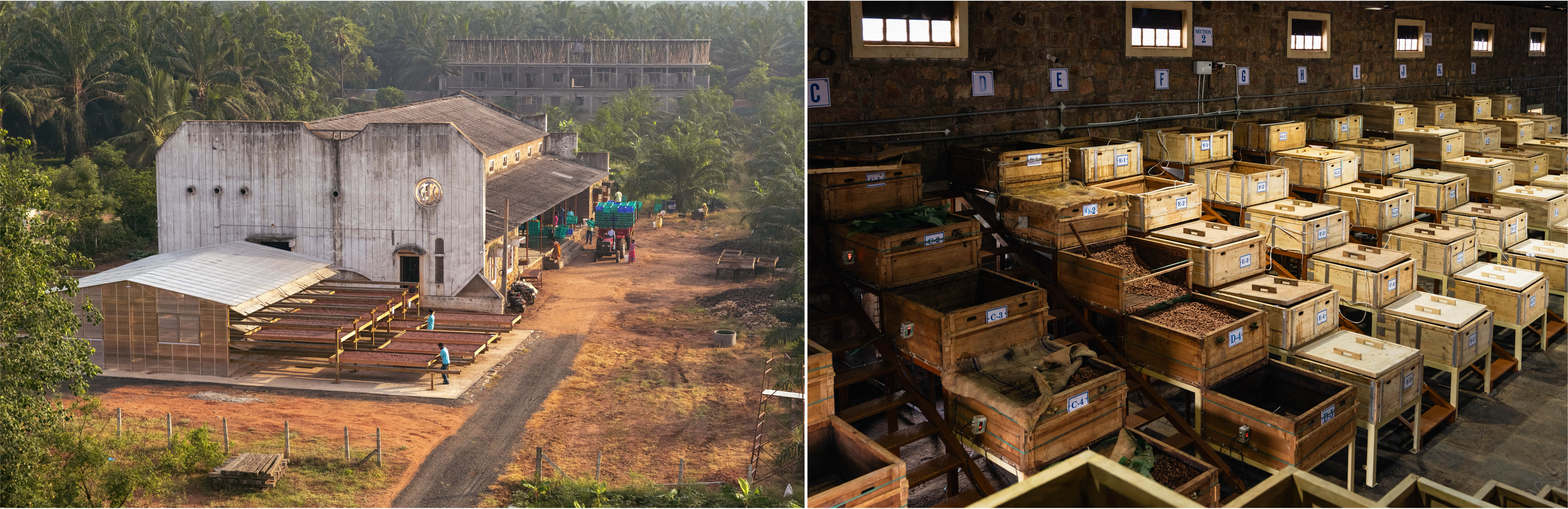
At the other end, Manam Chocolate (the consumer brand) exists to answer the question that follows: ‘what does genuinely fine-flavour Indian cacao actually taste like when someone bothers to make it properly?’ That answer ranges into 300-plus products across 50 categories - not because they lost count, but because that abundance is the point. “If we were only chocolate makers we would only make bars,” he says. “But we see this as a new category. And it was important to us to introduce and show off the versatility of Indian chocolate through the product mix.”

The early response was convincing enough: within 100 days of launch, Manam Chocolate won 17 awards at the Academy of Chocolate in the UK - including Overall Winner in Brand Experience among more than 1,400 international entries.

The other reason for the “abundant” product catalogue is the desire to hark back to India’s original association with chocolate - as a flavour or an ingredient. It means you can find Manam Chocolate expressed everywhere from tablets, bonbons, barks, fudge, truffles, muffins, cakes, soft serves, croissants, a 36-drink beverage bar, and seemingly every possible form Indians have ever consumed it. “Because we were mithaiwalas,” Chaitanya says, “we were used to both width and depth of product offerings. The execution didn’t scare us.”
What does this product say about India or the Indian Consumer?
I asked Chaitanya if he could put a name to the paradigm of consumption that Manam Chocolate had found itself in the midst of. His answer -
“Discovery”
It’s a solid response. As we’ve documented before, something has shifted in the Indian consumer - and it’s more specific than premiumisation, more interesting than aspiration. It’s the desire to find something genuinely new, something thats ‘yours’ (vs something from somewhere else), something you can’t help but share with someone else. “India wants to discover,” Chaitanya says. “You want to share this discovery with others, in a form that is culturally relevant to Indians. Buy and share, buy and gift…those were the two paradigms that we built the product mix on: one is self-indulgence and the other is gifting. Self-indulgence is, of course, our desire to give ourselves a treat. And gifting plays on our social proclivity as Indians to gift, share and consume sweet things, which we’ve done for decades, if not centuries.”
That shift - from aspiration to discovery, from imported legitimacy to homegrown pride - is the macro story that Manam sits inside. For a long time, Indians didn’t attribute quality or value to things that came from home. That’s changing, and changing fast. You can see it in wine, whisky, coffee, luggage, apparel. The Indian consumer has become, as Chaitanya puts it, genuinely ruthless on product. “India hai toh sasta hai - that notion we’re trying to break. But it starts from the fact that the product has to be really good. And our confidence comes from our product.”
What makes the timing particularly interesting is that craft chocolate - unlike every other craft category that’s taken root in India - didn’t happen somewhere else first and then arrive here late. “Craft chocolate is unlike craft gin, wine, whiskey, and coffee, where the movement happened in other countries,” Chaitanya says. “We have the opportunity to lead here in India. It’s such a nascent thing. And the science has only just started.” India isn’t playing catch-up so much as it’s running parallel, and Manam is making the case that it can run ahead. The craft chocolate scene that’s emerged around them - Naviluna, Mason & Co, Soklet, Paul & Mike, Subko Cacao and so many others - is real, growing, and entirely homegrown.
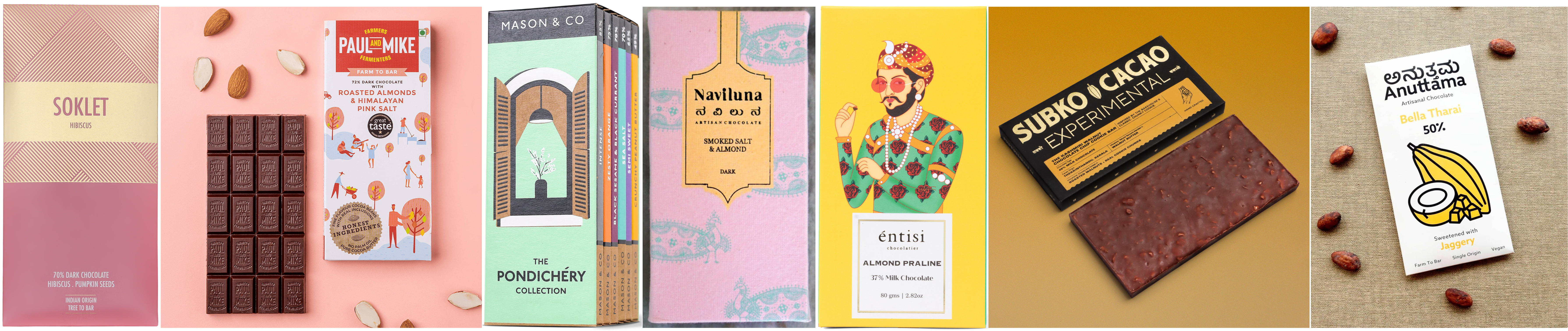
You could make the argument that Manam’s launch in August 2023, with its scale, its storytelling, its vertical integration and retail ambition, gave the category its first genuine public moment. That assertion is punctuated by Chaitanya’s back-of-the-envelope estimate that Manam currently occupies 20% of India’s small but rapidly growing craft chocolate market, aiming to rise to 40-50% over the next 12-18 months.
The international dimension is equally telling. Chaitanya notes, perhaps counterintuitively, that convincing a global buyer can be easier than convincing a domestic one. Indian consumers still carry a residual suspicion (“this doesn’t feel very Indian” is a comment he still hears) that foreign buyers simply don’t have. Internationally, the origin story is novel. The Switzerland export, the conferences, the awards, the TIME list - the world, it turns out, is more ready to take Indian cacao seriously than Indians are. “But you have a responsibility to represent India overseas,” he says. “If you mess it up, you can create friction for those who want to follow you. You need everything to be there on product, packaging, price, everything. But if you get it right, you open the door for everyone else too. Indian chocolate is not yet a thing in the way Belgian or Swiss chocolate is a thing. We know it’s going to be a decade or two’s work. But we’re here for it.”
The product itself is perhaps the most eloquent part of the argument. Chaitanya jokes (I think) that Alphonso mangoes are banned at Manam — not because they’re not delicious, but because reaching for India’s most famous fruit is exactly the kind of lazy shorthand they are trying to avoid. “It’s us as Indians stereotyping ourselves as Indian,” as he puts it. Instead, the ingredient narratives run through things like the Chakkar Keli banana — a sweet, slightly floral variety from the Krishna and Godavari delta that he personally trucks to Hyderabad and Delhi to make eight or nine products with. The curry leaf bonbon. The Himayat mango. Specific, geographical - the indie-rock deep-cut of Indian flavours. “We don’t have to reduce ourselves into a checkbox of kesar, elaichi, badam,” he says. “If we embrace the complexity of what we are as Indians in 2025 - which includes flavours like peanut butter, raspberry, and lime, we will be successful not in spite of being in India but because of it.”
That, ultimately, is what Manam Chocolate says about India: that the country has reached the point where it can build something world-class, from the ground up, in a category it didn’t invent — and offer it to the world on its own terms. Chaitanya puts it simply: “The goal is to build a culturally sound company at scale - premium chocolate that happens to be craft chocolate - and prove that chocolate from India is viable for the global market.” Not foreign chocolate stamped onto India. Indian chocolate, bestowed on the world. The colony, for once, supplying the connoisseur.
My take?
I’ve been following the Manam Chocolate story since they launched in 2023. I’m glad they exist, I’m glad Chaitanya is as obsessed as he is, and I’m glad they’re doing what they’re doing. There’s so many little touches about their story, their packaging and their product that I appreciate, and that only someone who was in it for the love of the game would care to implement.
But all of that would be pointless window-dressing if the product wasn’t good.
So, is it?
To me, their stuff is excellent. Aside from their 100% dark chocolate bar which wasn’t my vibe, everything else I’ve ever tried from them has been awesome. I love the fact that they’re trying to showcase Indian ingredients and flavour-combinations you can’t find anywhere else. I am no chocolate connoisseur, but I don’t see any reason why their products couldn’t stand shoulder to shoulder with any of the other big names in the market, particularly in a time of homegrown Indic curiosity (both within and outside India). I hope they take this thing all the way, and I’m looking forward to doing a deeper dive on them somewhere down the line.
Can you see this becoming a regular part of your life?
Potentially. I’m not sure if there will be a perennially replenished store of Manam Chocolate in our home, mostly because we’re content enough getting our chocolate fix from a number of different places (at the time of writing, our chocolate dabba in the kitchen has something from The Whole Truth, Cadbury, AMUL, Didier & Frank, and of course Manam, plus always a few stray mini-Snickers and Bounty’s). However, on the two counts that they are explicitly solving for - indulgence and gifting - Manam will be top of mind for me. And definitely good for a visit the next time I’m in Delhi or Hyderabad.
Any other references/links?
From Bean to Beyond | Manam Craft Chocolate | Chaitanya Muppala | The Expressions Podcast
Manam Chocolates wants to showcase Indian craft chocolate to the world
This Indian Is Disrupting The ₹18,000 Crore Chocolate Market
How Manam Chocolate is leading a chocolate revolution in India | Ground Report
Inside Manam Chocolate Karkhana | India’s Bean-to-Bar Story | Chocolate Day
Can Indian Chocolate Rival The Swiss & Belgians? | Manam Chocolate Has a ‘Sweet’ Plan | CNBC TV18
Manam Chocolate Karkhana: Hyderabad’s Chocolate Delight | #RoadTrippinwithRocky S10 | D02V02
Manam, Chocolate Factory In Hyderabad, Listed In Time Magazine’s Top 100 Amazing Places
Manam Chocolate’s founder is bringing tech to chocolate
The Unfinished Dream Behind Amul’s Foray into the Chocolate Industry
If you enjoyed this post from Next Up India, you might like our other India-focused media brands too. Learn more about the coolest things happening in the Indian startup ecosystem at Tigerfeathers and Runtime BRT.
And if you want to contribute one of these yourself or shout out a product you loved, get in touch and get involved🫡
I have recently become obsessed with 99% and 100% dark chocolate to curb my late night snacking. My 2-year-old son also weirdly likes it 🤷♂️ Gotta give this a try! Also, love the recognition of cacao farmers (with their names) on the packaging, beautiful.